Norges grunnlov
The Constitution of Norway
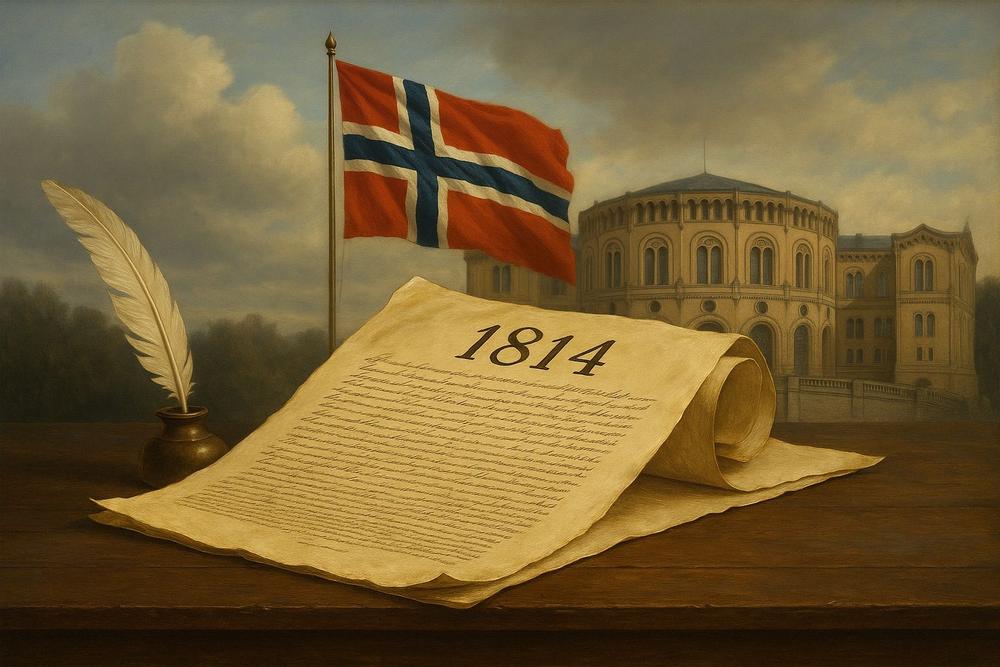
Grunnloven av 1814 regnes som et av de mest betydningsfulle dokumentene i norsk historie, ikke bare fordi den markerte landets formelle brudd med Danmark etter mer enn fire hundre års union, men også fordi den etablerte et politisk rammeverk som i stor grad har stått seg frem til i dag.
The Constitution of 1814 is considered one of the most significant documents in Norwegian history, not only because it marked the country’s formal break with Denmark after more than four hundred years of union, but also because it established a political framework that has largely held up to the present day.
Selv om teksten naturligvis er blitt endret og modernisert gjennom utallige grunnlovsendringer, hviler dens ånd fortsatt på opplysningstidens ideer om folkesuverenitet, maktfordeling og rettssikkerhet.
Although the text has of course been changed and modernized through countless constitutional amendments, its spirit still rests on Enlightenment ideas of popular sovereignty, separation of powers, and the rule of law.
At Norge, et lite land i Europas utkant, formulerte en av verdens mest liberale forfatninger tidlig på 1800-tallet, har gitt Grunnloven en nesten mytisk status i den nasjonale selvforståelsen.
That Norway, a small country on Europe’s periphery, formulated one of the world’s most liberal constitutions early in the nineteenth century has given the Constitution an almost mythical status in the national self-understanding.
Den syttende mai feires derfor ikke bare som en nasjonal festdag, men som en levende manifestasjon av folkestyrets grunnprinsipper.
The seventeenth of May is therefore celebrated not only as a national holiday, but as a living manifestation of the fundamental principles of popular rule.
Samtidig må man erkjenne at Grunnloven i sin opprinnelige form hadde klare begrensninger, for eksempel ved å utelukke store deler av befolkningen fra politisk innflytelse og ved å inneholde diskriminerende bestemmelser.
At the same time, one must acknowledge that the Constitution in its original form had clear limitations, for example by excluding large parts of the population from political influence and by containing discriminatory provisions.
Dagens utfordring ligger derfor i å videreutvikle og tolke Grunnloven på en måte som både ivaretar tradisjonens tyngde og samtidig åpner for en stadig mer inkluderende demokratisk praksis.
Today’s challenge is therefore to further develop and interpret the Constitution in a way that both preserves the weight of tradition and at the same time opens for an ever more inclusive democratic practice.
Comprehension Check
Question 1 of 4
Hvilket spenn ved Grunnloven understreker teksten?